Explore Tafaria
♻

Sustainability, Conservation & Environmental Stewardship

How Tafaria connects land stewardship, biodiversity, environmental art, Tree-Talk, conservation education, agriculture and community participation.

9 Articles

How Does Tafaria Approach Sustainability and Conservation?

Conservation is woven into the Tafaria experience.

The landscape, Nano Herbarium, Nano Farm, gardens and outdoor learning spaces encourage every visitor to appreciate, protect and restore the natural environment. Sustainability is treated as a practical responsibility rather than a separate activity.

Connecting land, food and responsibility

Land stewardship includes practical choices about plants, soil, water, animals, waste and how spaces are designed. Small decisions made repeatedly can have more impact than a single symbolic activity.
Tafaria’s Conservation Philosophy

Tafaria believes that people protect what they understand and value.

By creating enjoyable experiences in nature, visitors develop a deeper appreciation of biodiversity, ecosystems and the importance of caring for the environment for future generations.

The emphasis is on making conservation visible in the visitor experience. People are more likely to care about a landscape when they have walked through it, learned the story of a plant or animal, or taken part in a practical activity connected with it.

Biodiversity and Ecosystem Learning at Tafaria

The estate showcases a wide variety of indigenous and cultivated plants, wildlife habitats and agricultural systems.

Through the Nano Herbarium and guided interpretation, visitors learn how different species contribute to healthy ecosystems and resilient communities.

Biodiversity is easier to understand when visitors can compare plants, habitats and the roles different living things play. The herbarium gives that observation a structure and connects species knowledge with wider questions about resilience and care for the environment.

Responsible Land Stewardship at Tafaria

Tafaria manages its grounds to balance hospitality, agriculture, recreation and conservation.

Landscaped gardens, woodlands, open fields and productive farming areas demonstrate that development and environmental care can coexist.

Different parts of the property have different jobs, and stewardship means balancing them rather than treating every acre the same. Productive land, gardens, learning areas and natural spaces all need decisions that protect long-term usefulness.

Environmental Learning Through the Nano Herbarium and Nano Farm

Schools and families explore environmental themes through the Nano Herbarium, Nano Farm, tree planting, biodiversity observation and community conservation activities.

Learning focuses on practical action that can be applied at home and in schools.

Environmental care in a working destination

Community participation is important because environmental care continues outside the boundaries of a destination. Ideas learned at Tafaria are most useful when visitors can adapt them at school, at home, on a farm or in another shared space.

Community Conservation and Environmental Action at Tafaria

Visitors are encouraged to participate in activities that strengthen neighbouring communities, including tree planting, environmental clean-ups and awareness programmes.

Community conservation at Tafaria links environmental care with participation by schools, partners and neighbouring communities.

Environmental work becomes more durable when people around it understand and participate in it. School activities, local partnerships and practical projects can turn conservation from an abstract message into something people have helped to do.

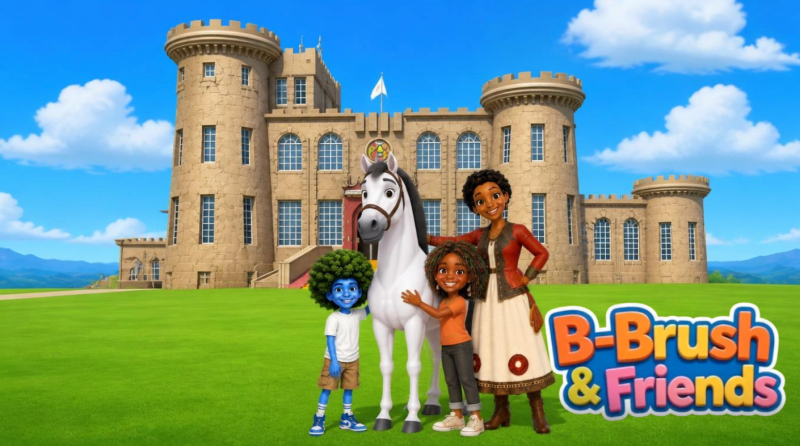
How B-Brush & Friends Teaches Environmental Responsibility

Environmental responsibility is reinforced through B-Brush & Friends.

Podo's PodoSafi initiative promotes responsible waste management, while Shosh introduces children to nature and the Ten Plant Clans, helping conservation become memorable and enjoyable.

Conservation as everyday practice

For students, conservation becomes easier to understand when it is connected to visible systems. Seeing where food grows, how animals are cared for or how plant diversity is organised makes environmental responsibility less abstract.

Tafaria's conservation work is woven into visitor and learning experiences rather than treated as a separate subject. The Nano Herbarium, Nano Farm, landscape and B-Brush stories all create opportunities to discuss how people use and care for natural resources.

Tree-Talk Exhibition at Tafaria: Stories Across the Castle Grounds

Fourteen interactive installations that invite visitors to listen, learn and think differently about trees.

Tree-Talk turns a walk around Tafaria into an environmental conversation. The exhibition consists of 14 interactive installations spread across the Castle grounds, each created to strengthen the visitor's emotional connection with trees.

How the exhibition works

Each installation uses a QR code to open another layer of the experience. Visitors can listen, learn and reflect on the stories being told rather than seeing the tree or artwork as a silent object in the landscape.

Why Tafaria uses storytelling

Environmental care can feel abstract when it is presented only as rules. Tree-Talk approaches the subject through curiosity and story, giving people a reason to stop, notice and think about what trees contribute to the places where we live.

Experiencing Tree-Talk

The installations can be encountered as part of a wider walk through the property and also fit naturally into school, conservation and arts visits. A phone capable of opening QR codes makes the interactive layer easier to explore.

Hand of Paradise at Tafaria: Art Made from an Environmental Message

Kelvin Oduor’s installation uses discarded plastic bottles to turn waste, recycling and responsibility into a memorable image.

The Hand of Paradise is one of Tafaria's most recognisable environmental art installations. Created by Kelvin Oduor, the giant hand uses plastic bottles to make a simple point visible from a distance: the materials people throw away can become part of a new story.

Waste becomes the material

Because the work is built from plastic bottles, the environmental message is part of the sculpture itself rather than an explanation added afterwards. It connects waste management and recycling with the creative possibility of looking at a familiar material differently.

From installation to B-Brush & Friends

The Hand of Paradise also appears in the B-Brush & Friends world, where it becomes a character in a story about keeping the environment clean. That connection allows a child to encounter the same idea twice: first as an imaginative story and again as a real artwork at Tafaria.

A useful stop for conversation

For families and school groups, the installation creates an easy starting point for questions about plastic, responsibility and what it means to use creativity in environmental care.